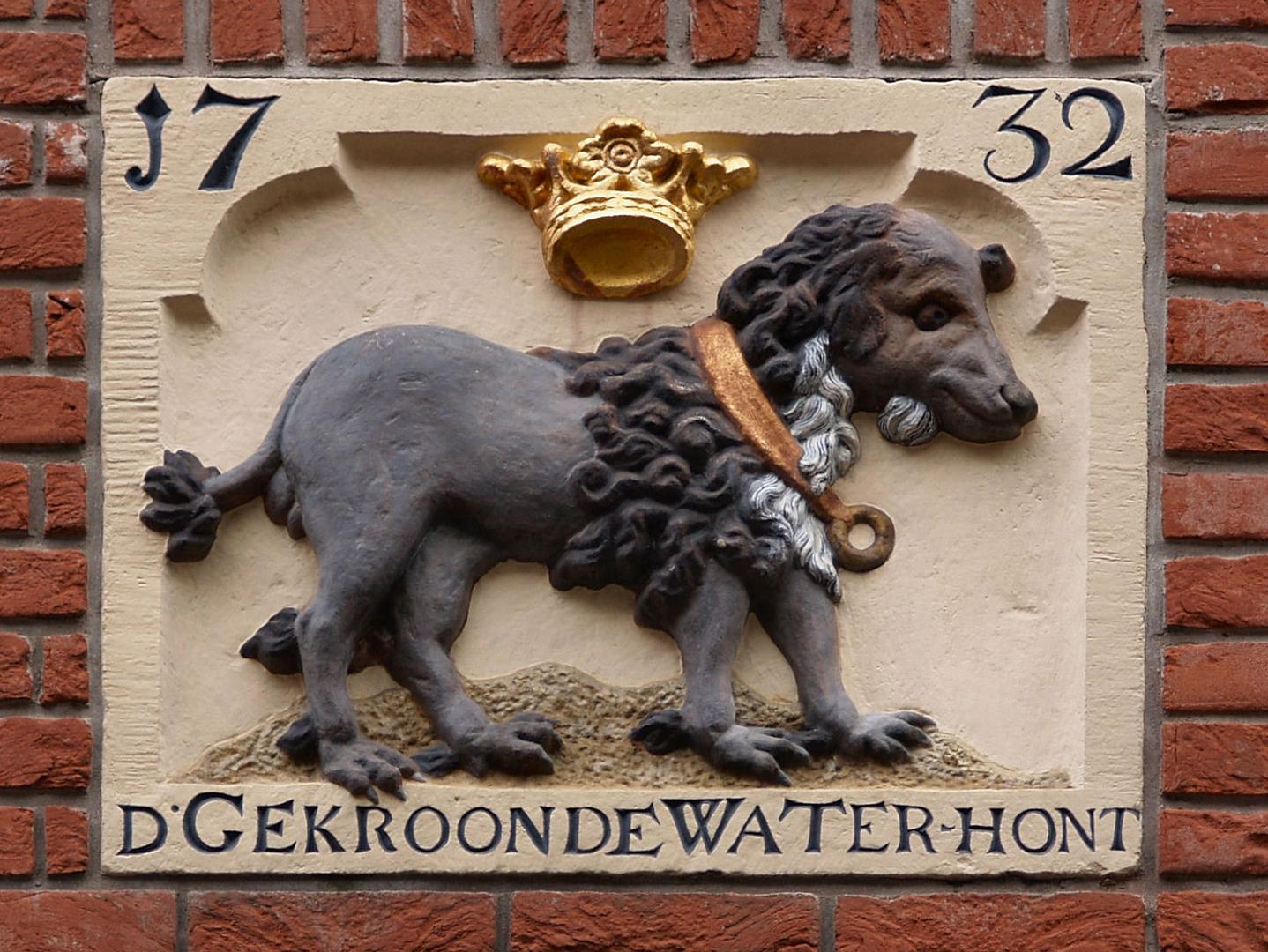
On Nieuwe Leliestraat, in the Jordaan neighborhood, a gable stone shows a dog with a crown. The inscription, “D’ Gekroonde Waterhont”, means roughly “the crowned water dog.” The piece is located at number 109 and is dated 1732.[1]
The image is reminiscent of the Portuguese Water Dog, a breed originating in Portugal and traditionally tied to fishing. These dogs helped fishermen recover nets and objects and carry messages between boats and land.
That resemblance raises a curious question: could Portuguese dogs have reached the Netherlands aboard ships? Maritime routes linked European ports, and working dogs accompanied fishermen and sailors. Even so, there are no known records identifying the animal on the stone as a Portuguese Water Dog or documenting its arrival in Amsterdam with Portuguese sailors.
The stone allows us to state that, in 1732, a house on Nieuwe Leliestraat was associated with a crowned “water dog.” A local source describes the figure as resembling a poodle and also mentions the name “crowned white dog.” The term may refer to a dog connected with water without pointing to a specific breed.[2]
The Portuguese connection remains a possibility suggested by the name and the image. Whatever the origin of the animal depicted, the stone preserves a fragment of life in the Jordaan: at a time when houses were recognized by symbols and names, a crowned dog could become their mark.
References
[1] Inventory of Amsterdam gable stones — Nieuwe Leliestraat 109
[2] History of Jordaan house names — “De gekroonde waterhont”